
Start with the area you want to cover and where you will use the device. A bigger device only earns its place if you need the extra coverage.
We have not personally tested these devices. This is buying research, not medical advice. How we assess products
Try a setup rehearsal before buying
Use paper or a cardboard outline to represent the published device dimensions. Put it where you intend to use and store the equipment, leaving room for the working distance required by its instructions. Walk through taking it out, arranging the controller and putting it away. This is a space-planning exercise, not a substitute for trying the device or measuring coverage.
| Decision | Next step | Why it matters |
|---|---|---|
| Face-focused buyer | Mask | Investigate fit before adding body coverage you may not use. |
| Buyer wanting an adjustable light source | Panel | Check the full stand footprint and supported working positions. |
| Buyer considering a soft body device | Mat or flexible panel | Confirm contact, support and storage permissions for that exact model. |
Start with a place, not a specification
Picture the device in your home. Would you put it on your face while sitting down, set it on a desk, or take it out for a body-care session? Those are different purchases. Write down the area you want to cover, where the equipment will live, and how much setup you are willing to repeat.
Our practical starting point is a face mask for a face-focused routine. Consider a panel if you want a separate light source that you can position toward different areas. Consider a flexible body device if its instructions explicitly support the position and area you have in mind. These are format choices, not a ranking of clinical results.
| Format | What to investigate | The tradeoff |
|---|---|---|
| Face mask | Eye and nose openings, straps, controller placement | A defined shape may not suit every face. |
| Rigid panel | Stand or mount, working distance, coverage at that distance | Plan space for both the equipment and the user. |
| Flexible panel / wrap / mat | Allowed positions, contact rules, cleaning, storage | Flexible does not automatically mean foldable, wearable, or safe to lie on. |
“Panel” does not always mean a metal box
CurrentBody markets its LED Light Therapy Panel as a flexible device. That matters when browsing: a product name alone will not tell you whether the equipment stands away from the body or can be arranged in other ways. Read the setup instructions before treating two panels as substitutes.
Buy for one clear purpose first
Make a list of your primary goal and optional extras. If facial skincare is the whole goal, do not let a long list of body-wellness claims push you toward a larger purchase. Ask what evidence exists for the exact device and intended use. Coverage and convenience can be assessed separately from efficacy.
What we cannot decide from a product page
We have not worn these devices or measured their output. A photograph cannot establish comfort, and dimensions cannot establish even light delivery. Treat those as open questions and check whether the seller permits returns after opening and trying the product.
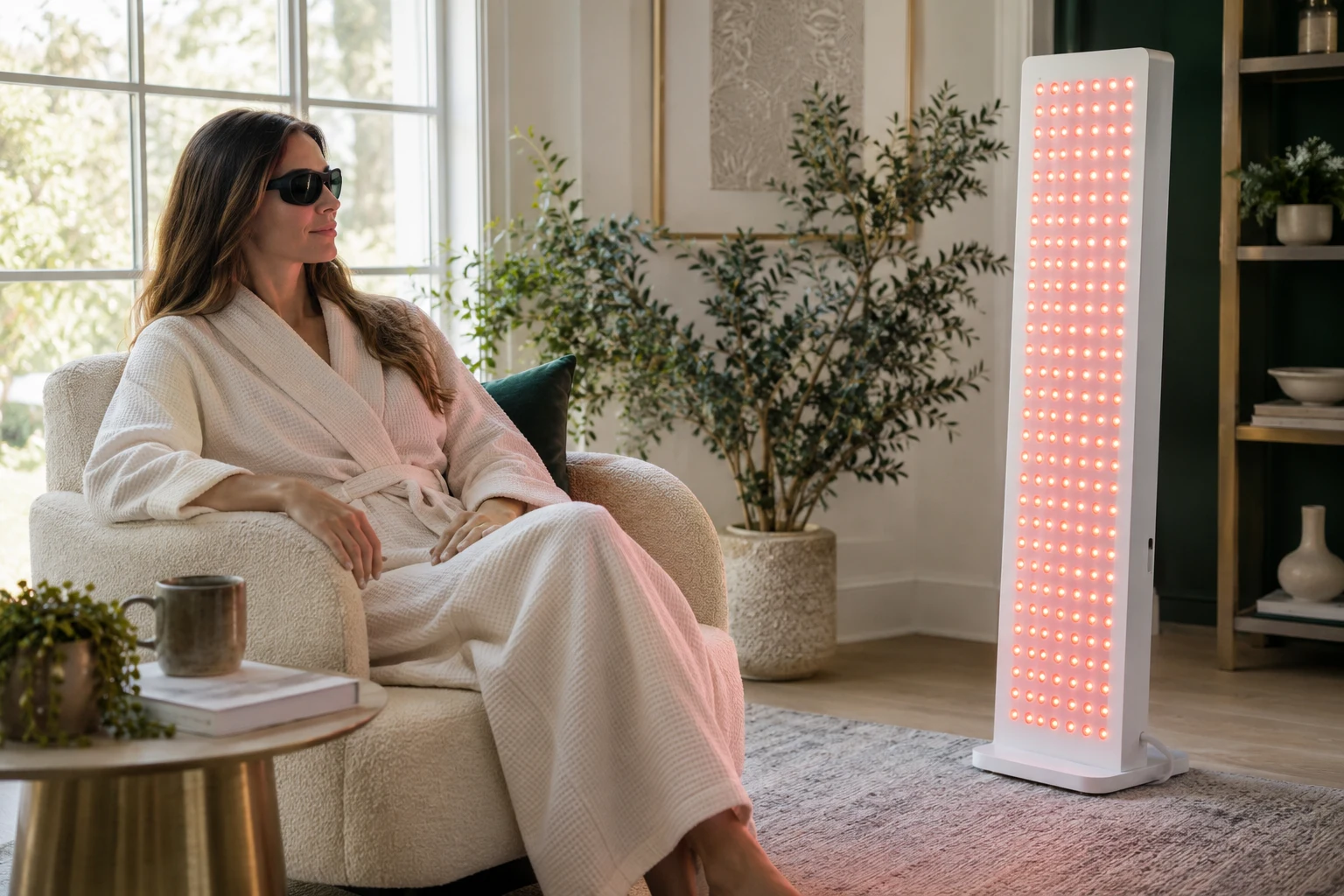
Three household scenarios
A face-only evening routine. A mask has a straightforward job: remain in a repeatable position on your face. Before comparing prices, decide whether you are happy to set aside a seated session. If you expect to walk around, consider the controller and cable as part of what you will carry. A promotional image of someone multitasking does not establish that the same activity is appropriate for you.
A shared room with limited storage. A rigid panel may require a stand, a clear working area, and a place to leave everything between sessions. Measure the whole setup, then imagine putting it away several times a week. If another household member needs the same space, that recurring setup burden may matter more than the purchase-price difference.
Different body areas on different days. A flexible format may look adaptable, but list the exact positions you need and check each against the manual. An illustration showing a curved device does not grant permission to fold it sharply or lie on it. Ask whether the controller, cable, stand and cleaning method support your intended routine.
Compare the ownership burden, not just coverage
Make a three-column list: equipment kept out, minutes of setup, and items to clean. You can estimate these from the manual and seller demonstrations, then verify them during the eligible return period. Keep estimates separate from observed timings. A device that becomes a permanent inconvenience is an expensive purchase even when its technical specification is impressive.
Ready to make a shortlist?
Compare four face masks by format and routine, with links to our research and the manufacturers.
Compare LED face masks ↗Frequently asked questions
Can a panel replace a face mask?
It may be an alternative to investigate when its intended use supports your goal. It is a different physical setup, and comparable skincare results cannot be inferred from size alone.
Can every flexible light device be used while lying on it?
No such permission follows from flexibility. Check whether the exact device supports body weight and direct contact in that position.
Which format is easiest to store?
Compare stored dimensions, controller, cables and stand rather than device dimensions alone. A compact light can still need a bulky stand.
Sources & verification
Editorial structure updated September 10, 2026. Original source checks: September 8, 2026; selected manufacturer specifications and policies rechecked September 10. Consumer accounts retain their original attribution and limitations. Prices and terms may change.
Product links lead directly to manufacturers and are not affiliate tracking links in this edition.